
Commercial real estate portfolios generate IT assets in ways most ITAD programs are not designed to handle. Tenant turnover, lease expirations, bankruptcies, and abandoned spaces leave behind computers, servers, monitors, printers, and other electronics that become the responsibility of the property owner or facilities manager. ITAD recycling for commercial real estate management exists to address that reality efficiently and without disruption.
Digital ITAD™ works with commercial real estate management and facilities teams on both an administrative and operational basis. ITAD recycling for commercial real estate management supports on-site pickup of inner-office computers and peripherals at corporate headquarters, regional offices, and satellite locations. The same service extends to abandoned tenant equipment left behind in office suites, data rooms, and common areas.
Unlike standard ITAD programs designed for single corporate tenants, commercial real estate ITAD recycling must account for assets that arrive with no documentation, no clear owner, and no reuse pathway. Digital ITAD™ provides practical solutions for these situations, ensuring equipment is removed, processed, and recycled correctly.
Commercial real estate ITAD recycling must fit around building operations, not disrupt them. Properties cannot hold abandoned equipment indefinitely, and facilities teams need predictable removal timelines.
This approach allows ITAD recycling for commercial real estate management to function as part of normal building operations.
Office buildings and mixed-use properties generate IT waste differently than corporate IT departments. Commercial real estate ITAD recycling must address unpredictable asset volumes and conditions.
ITAD recycling for commercial real estate management is built around these realities rather than forcing property teams into corporate IT workflows.
Lease expirations and business closures frequently result in full or partial office clear-outs. ITAD recycling for commercial real estate management supports these events by removing IT equipment as part of broader asset disposition activities.
Digital ITAD™ regularly handles clean-outs following lease expirations, tenant bankruptcies, business shutdowns, and consolidations or relocations. These scenarios often involve mixed, undocumented, or damaged equipment that must be removed quickly and responsibly.
In addition to tenant assets, commercial real estate ITAD recycling also supports internal administrative offices. Headquarters and satellite offices generate routine IT refreshes, surplus equipment, and obsolete peripherals that require proper recycling.
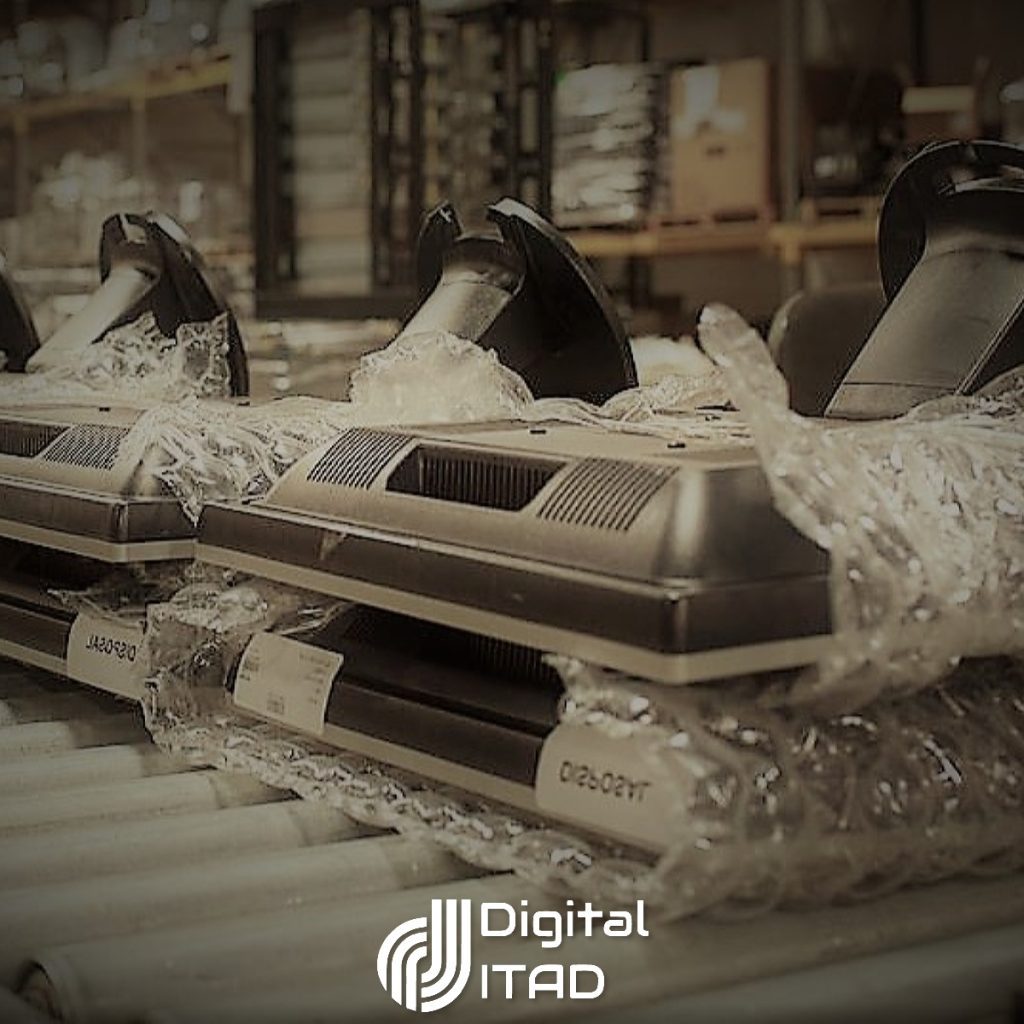
Digital ITAD™ provides on-site pickup for corporate office computers, laptops, monitors, peripherals, printers, and other office electronics. This allows facilities teams to manage internal IT disposal without coordinating multiple vendors.
Commercial properties have access restrictions, loading docks, elevators, and security requirements that differ from corporate campuses. ITAD recycling for commercial real estate management accounts for these constraints when planning pickups.
Oversized equipment, multi-floor removals, and after-hours access are handled as part of the logistics process rather than treated as exceptions.

While commercial real estate management is not driven by traditional IT compliance programs, accountability still matters. Commercial real estate ITAD recycling includes documentation confirming asset removal and recycling.
This documentation supports internal facilities records, property owner reporting, and environmental or sustainability initiatives without creating unnecessary administrative burden.
The purpose of ITAD recycling for commercial real estate management is to remove abandoned, obsolete, or surplus IT equipment efficiently and responsibly. It is not to impose rigid processes designed for corporate IT departments.
Digital ITAD™ provides commercial real estate ITAD recycling solutions that align with how properties actually operate—handling abandoned tenant assets, supporting office clear-outs, and keeping buildings ready for the next occupant.