
Secure data destruction for schools is a verification problem, not a recycling problem. Digital ITAD delivers secure data destruction for schools under R2v3-aligned practices, built around unit-level traceability, verification, and reporting that stands up to scrutiny. Schools retire devices in volume, often under time pressure, and that environment rewards shortcuts. Digital ITAD does the opposite. Secure data destruction for schools ends only when the outcome is proven, recorded, and reportable.
Chromebook data destruction sits at the center of most school device fleets, and laptop data destruction remains critical for staff and administrative endpoints. Hard drive destruction applies whenever storage media requires an outcome that cannot be proven through wiping. Digital ITAD executes Chromebook data destruction, laptop data destruction, and hard drive destruction under the same governing standard: if the result cannot be verified, the device is scrap and the only acceptable outcome is certified destruction. R2v3-aligned practices define how these outcomes are executed and documented.
Secure data destruction for schools fails when decisions rely on lock status, cosmetic condition, or “it should be fine” logic. A locked device is not a secure device. Devices can often be unlocked or accessed outside the United States, and sending locked assets to uncertified handlers creates real data risk with no way to prove the outcome. Digital ITAD runs secure data destruction for schools under R2v3-aligned practices specifically to remove that uncertainty.
Chromebook data destruction requires special attention because schools often assume the cloud makes the endpoint safe. It does not. Management state, account association, cached credentials, and recoverable access paths can persist. Laptop data destruction carries its own risk profile due to local storage, cached access, and user-level artifacts. Hard drive destruction becomes mandatory when wiping cannot be verified or when the required outcome is absolute certainty.
Chromebook data destruction must assume nothing. School-issued Chromebooks can retain student associations, management artifacts, cached credentials, and recovery states that remain exploitable when devices leave controlled custody. Digital ITAD performs Chromebook data destruction under R2v3-aligned practices with the same standard used across secure data destruction for schools: verified wiping when possible, certified destruction when not.
A managed or locked Chromebook is not automatically secure. Chromebook data destruction requires evaluation of unlock eligibility and wipe verification. When Digital ITAD can unlock and wipe a Chromebook with verification, Chromebook data destruction closes with a documented wipe outcome. When the Chromebook cannot be unlocked and wiped with verification, Chromebook data destruction closes with certified physical destruction and proof.
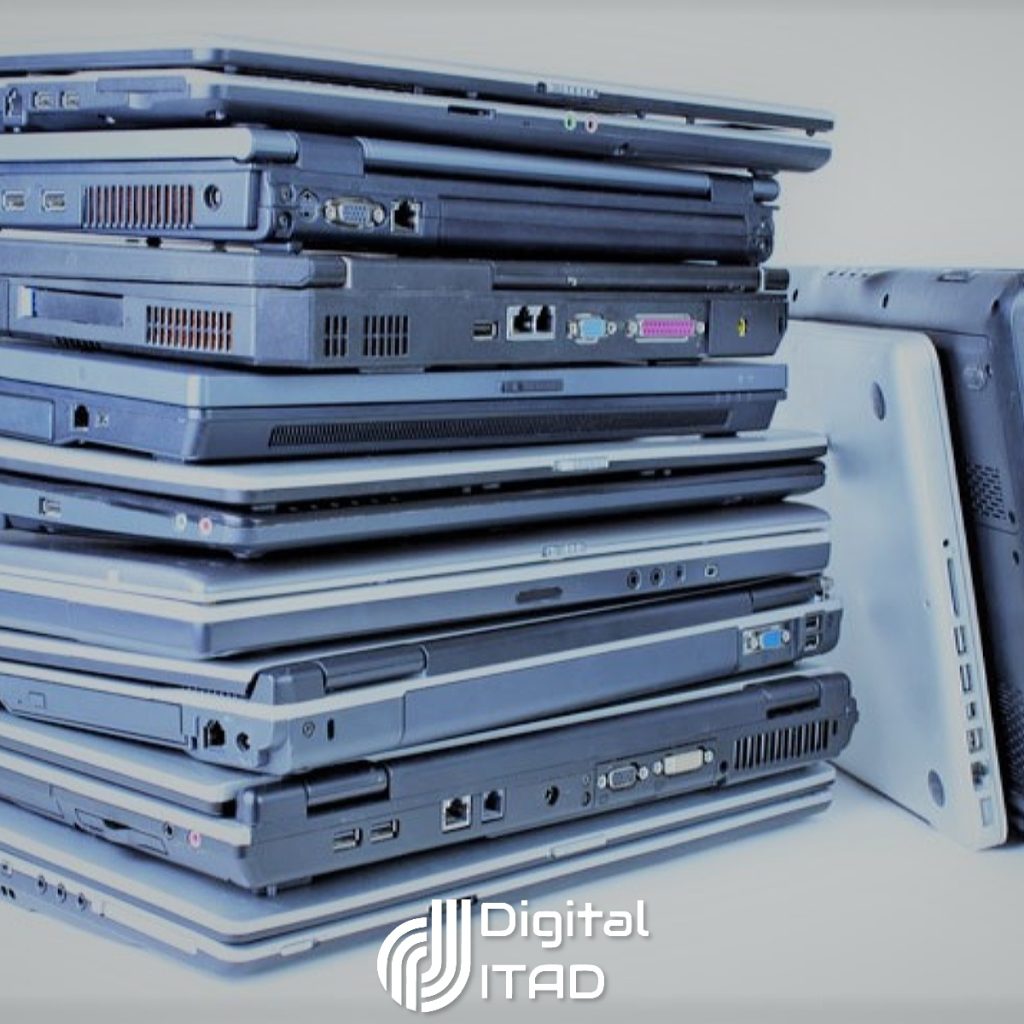
Laptop data destruction covers staff, administrative, and specialized-use devices that frequently contain local records, cached credentials, and access to internal systems. Digital ITAD executes laptop data destruction under R2v3-aligned practices and does not allow resale intent or cosmetic condition to override the outcome standard.
Laptop data destruction closes only one of two ways: verified wipe or certified destruction. If the laptop cannot be unlocked and wiped with verification, laptop data destruction requires physical destruction. No other disposition resolves data risk without relying on trust.
Hard drive destruction provides the highest certainty of outcome when wiping cannot be proven sufficient. Drives concentrate data risk, and any gap in verification creates exposure. Digital ITAD performs hard drive destruction under R2v3-aligned practices with unit-level tracking and documented proof of destruction.
Hard drive destruction is required whenever wiping is not possible, not permitted, or not verifiable. Hard drive destruction also applies when the only acceptable outcome is absolute certainty that the media no longer exists in a usable form. Digital ITAD treats hard drive destruction as a verified end state, not a fallback.
Secure data destruction for schools is only complete when the result can be proven. Digital ITAD reporting documents device receipt, the action taken, and verified final disposition. This reporting supports audits, internal governance, board review, and external scrutiny without asking anyone to “trust the process.” R2v3-aligned practices provide the operational framework; reporting provides the proof.
Chromebook data destruction, laptop data destruction, and hard drive destruction remain linkable as dedicated pages because each device category has unique risk drivers, but they all close under the same secure data destruction for schools standard: verification first, certified destruction when verification fails.