
CPA Data Destruction is a financial risk control, not an operational task. Accounting firms manage tax returns, payroll records, audit workpapers, and client financial data that remain sensitive long after engagements close. When devices leave custody without verified outcomes, the exposure remains with the firm.
Secure handling of end-of-life devices must eliminate that exposure with verification, traceability, and defensible reporting. Accounting Firm Data Destruction is executed through controlled processes where proof, not assumption, determines the outcome. If Financial Data Destruction cannot be verified, the device is scrap and the only acceptable result is certified destruction.
This standard applies consistently across Laptop Data Destruction, Hard Drive Destruction, and all other data-bearing devices handled for accounting firms.

Any outcome outside this framework leaves exposure unresolved.
Any outcome outside this framework leaves exposure unresolved.

CPA Data Destruction must withstand audit scrutiny, regulatory review, and client inquiry. Lock status, encryption claims, and resale intent do not satisfy that requirement. Only verification closes risk.
Accounting Firm Data Destruction fails when decisions rely on assumption instead of evidence:
Financial Data Destruction requires certainty. Tax data, payroll information, and audit materials cannot be treated as ordinary business records. If that data is later exposed, responsibility remains with the accounting firm regardless of who handled the device.
Verification governs every decision. Financial Data Destruction is never accepted based on trust, configuration, or intent. Proof is mandatory.
Tax Record Data Destruction carries elevated risk because tax records may remain subject to inquiry years after filing. Accounting firms must be able to demonstrate how that data was handled and how exposure was eliminated.
When Tax Record Data Destruction cannot be proven through wiping, certified physical destruction is required. No alternative outcome resolves the risk.
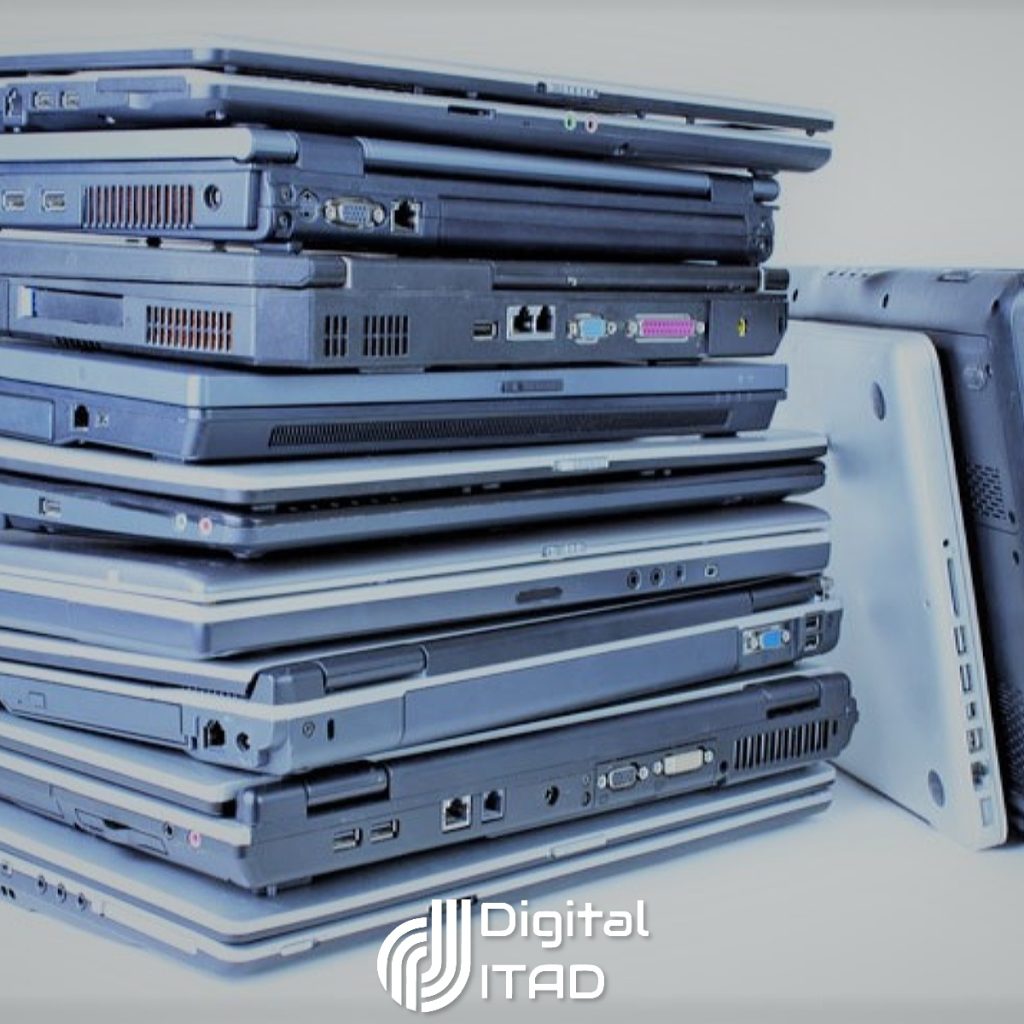
Laptop Data Destruction is a primary exposure point for accounting firms. Laptops routinely contain locally stored tax files, financial statements, audit schedules, and cached access to accounting systems.
Each device is processed individually. When wiping can be verified, Laptop Data Destruction closes with documented proof. When verification cannot be achieved, Laptop Data Destruction closes with certified destruction.
Cosmetic condition and resale value never influence Laptop Data Destruction outcomes.
Hard Drive Destruction is often the required outcome for Financial Data Destruction and Tax Record Data Destruction. Storage media concentrates risk, and wiping cannot always be proven sufficient.
Unit-level tracking and documented proof govern Hard Drive Destruction. Whenever wiping cannot be verified or absolute certainty is required, destruction is mandatory.